
Porchetta di Bevagna among the five typical dishes of the world to taste
From Myanmar to Mexico City passing through Bevagna
The New York Times
To accompany our cover article on regional food specialties around France, we asked some food experts to weigh in with their tips for must-eats in other parts of the world. Following is a selection.
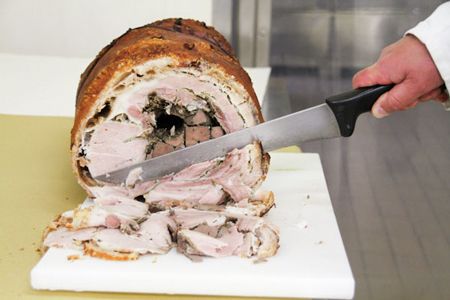
Porchetta in Umbria, Italy
In the ancient town of Bevagna in central Umbria, down a narrow and winding street, is a magnificent butcher shop called Macelleria Tagliavento. Head through the modest and dimly lit space, perfumed by cured meats hanging overhead, and you will find a delicatessen case filled with yet more meat. Past that, perched on a ledge, is a particularly magnificent porchetta. I grew up mostly around central Italy, and this version is the type I remember loving before industrialized methods took over.
Porchetta — a deconstructed whole pig, gutted and spiced, then stuffed, tied and roasted, with layers of meat, fat, stuffing and skin — originated in the area around Rome and in the former Vatican states. These days, it’s available all over Italy, including in Bevagna, in the heart of one of the most famous pork-curing regions of Italy. At Macelleria Tagliavento, the skin, glazed and crispy, covers perfectly moist flesh; traditional organ meats, wild fennel pollen, garlic, rosemary and lots of salt and pepper hide inside. The head is left attached for extra-dramatic presentation. It’s usually sold out by noon.
Marco Biagetti and Rosita Cariani, the owners, cut the porchetta by hand and use thick slices from a great round loaf of artisanal bread. After wrapping the sandwich in a little butcher paper, they will send you on your way into the street, blinking in the bright light.
SARA JENKINS, the chef at Porsena and Porchetta in New York.
Tlacoyos in Mexico City
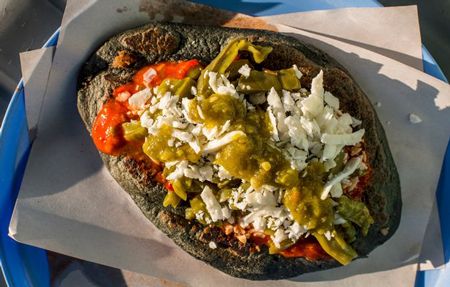
People have been eating tlacoyos — masa patties stuffed with either refried beans, a salty, spreadable cheese called requesón, or mashed fava beans — in one form or another since pre-Hispanic times, and they are still sold at sidewalk stands across Mexico City. Female vendors hand-pat the corn dough into the shape of a flattened football and then cook the patties until crisp and freckled on both sides, often at charcoal grills that sit inches from their laps. The toppings, though, push tlacoyos into the upper echelon of Mexico street food: cooked cactus strips, fresh onion and cilantro and a spoonful of salsa.
My favorite stand is run by Rosa Peña Sotres, who typically wears her gray hair in a braid. To find her, you get off at Metro Salto del Agua and head north on bustling Calle López. Her stand sits near Calle Delicias, just before the carnitas stand with the big clay pots. Ms. Peña Sotres has made tlacoyos for decades (her mother made them before her) and her skill comes across in each bite. The blue corn masa, which she prepares herself, is fluffy and airy; the fava beans add moisture and a nutty sweetness. When she asks, “Con todo?” the answer for me is always yes.
I loved her tlacoyos so much that I asked her if she accepted students. Soon afterward I found myself in the spotless patio of her house, in a nearby town. She showed me how she grinds her beans on a ground stonetool called a metate — brushing the stone cylinder against the base with sharp, quick motions — and the correct way to place the tlacoyos on the grill, first in the center, then off to the edges. After making a few dozen tlacoyos, my feet and back hurt. Ms. Peña Sotres had barely broken a sweat.
LESLEY TELLEZ, writer and blogger, The Mija Chronicles.
Tlacoyos in Mexico City
People have been eating tlacoyos — masa patties stuffed with either refried beans, a salty, spreadable cheese called requesón, or mashed fava beans — in one form or another since pre-Hispanic times, and they are still sold at sidewalk stands across Mexico City. Female vendors hand-pat the corn dough into the shape of a flattened football and then cook the patties until crisp and freckled on both sides, often at charcoal grills that sit inches from their laps. The toppings, though, push tlacoyos into the upper echelon of Mexico street food: cooked cactus strips, fresh onion and cilantro and a spoonful of salsa.
My favorite stand is run by Rosa Peña Sotres, who typically wears her gray hair in a braid. To find her, you get off at Metro Salto del Agua and head north on bustling Calle López. Her stand sits near Calle Delicias, just before the carnitas stand with the big clay pots. Ms. Peña Sotres has made tlacoyos for decades (her mother made them before her) and her skill comes across in each bite. The blue corn masa, which she prepares herself, is fluffy and airy; the fava beans add moisture and a nutty sweetness. When she asks, “Con todo?” the answer for me is always yes.
Tlacoyos in Mexico City
People have been eating tlacoyos — masa patties stuffed with either refried beans, a salty, spreadable cheese called requesón, or mashed fava beans — in one form or another since pre-Hispanic times, and they are still sold at sidewalk stands across Mexico City. Female vendors hand-pat the corn dough into the shape of a flattened football and then cook the patties until crisp and freckled on both sides, often at charcoal grills that sit inches from their laps. The toppings, though, push tlacoyos into the upper echelon of Mexico street food: cooked cactus strips, fresh onion and cilantro and a spoonful of salsa.
My favorite stand is run by Rosa Peña Sotres, who typically wears her gray hair in a braid. To find her, you get off at Metro Salto del Agua and head north on bustling Calle López. Her stand sits near Calle Delicias, just before the carnitas stand with the big clay pots. Ms. Peña Sotres has made tlacoyos for decades (her mother made them before her) and her skill comes across in each bite. The blue corn masa, which she prepares herself, is fluffy and airy; the fava beans add moisture and a nutty sweetness. When she asks, “Con todo?” the answer for me is always yes.
I loved her tlacoyos so much that I asked her if she accepted students. Soon afterward I found myself in the spotless patio of her house, in a nearby town. She showed me how she grinds her beans on a ground stonetool called a metate — brushing the stone cylinder against the base with sharp, quick motions — and the correct way to place the tlacoyos on the grill, first in the center, then off to the edges. After making a few dozen tlacoyos, my feet and back hurt. Ms. Peña Sotres had barely broken a sweat.
LESLEY TELLEZ, writer and blogger, The Mija Chronicles.
Tlacoyos in Mexico City
People have been eating tlacoyos — masa patties stuffed with either refried beans, a salty, spreadable cheese called requesón, or mashed fava beans — in one form or another since pre-Hispanic times, and they are still sold at sidewalk stands across Mexico City. Female vendors hand-pat the corn dough into the shape of a flattened football and then cook the patties until crisp and freckled on both sides, often at charcoal grills that sit inches from their laps. The toppings, though, push tlacoyos into the upper echelon of Mexico street food: cooked cactus strips, fresh onion and cilantro and a spoonful of salsa.
My favorite stand is run by Rosa Peña Sotres, who typically wears her gray hair in a braid. To find her, you get off at Metro Salto del Agua and head north on bustling Calle López. Her stand sits near Calle Delicias, just before the carnitas stand with the big clay pots. Ms. Peña Sotres has made tlacoyos for decades (her mother made them before her) and her skill comes across in each bite. The blue corn masa, which she prepares herself, is fluffy and airy; the fava beans add moisture and a nutty sweetness. When she asks, “Con todo?” the answer for me is always yes.
I loved her tlacoyos so much that I asked her if she accepted students. Soon afterward I found myself in the spotless patio of her house, in a nearby town. She showed me how she grinds her beans on a ground stonetool called a metate — brushing the stone cylinder against the base with sharp, quick motions — and the correct way to place the tlacoyos on the grill, first in the center, then off to the edges. After making a few dozen tlacoyos, my feet and back hurt. Ms. Peña Sotres had barely broken a sweat.
LESLEY TELLEZ, writer and blogger, The Mija Chronicles.